商品描述
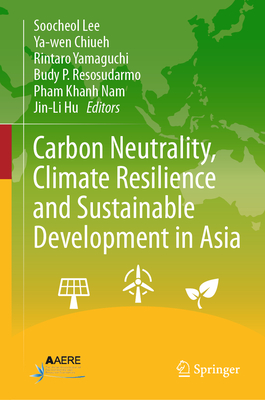
This book provides a comprehensive analysis of the interconnected challenges facing the Asian continent in the era of climate change. Structured in three parts, the book addresses the critical pathways toward a sustainable future. Part I delves into the core mitigation strategy of carbon pricing, examining the design and effects of carbon taxes in Taiwan, the impact of internal carbon pricing within Japanese corporations, and the potential for regional cooperation through joint carbon markets among ASEAN, Japan, China, and South Korea. Part II broadens the scope to energy policy and sustainable development, exploring diverse topics from the rise of climate litigation in China and the complexities of international environmental agreements, to new frameworks for energy security in Vietnam and the tensions between industrialization and renewable energy in ASEAN. Part III focuses on climate resilience and adaptation, presenting empirical case studies on the human and environmental impacts of natural disasters. It investigates the mental health consequences of volcanic eruptions, the gendered dimensions of flooding in Indonesia, the economic valuation of habitat conservation in Taiwan, and strategies for mitigating typhoon losses in Vietnam. Aimed at scholars, policymakers, and professionals in environmental economics and policy, this volume serves as a comprehensive guide to the evolving dynamics of Asia's path toward a carbon-neutral and ecologically resilient future.
商品描述(中文翻譯)
本書提供了對亞洲大陸在氣候變遷時代所面臨的相互關聯挑戰的全面分析。全書分為三個部分,探討通往可持續未來的關鍵途徑。
第一部分深入探討碳定價的核心減緩策略,檢視台灣碳稅的設計與影響、日本企業內部碳定價的影響,以及東協、日本、中國和南韓之間透過聯合碳市場進行區域合作的潛力。第二部分擴大範圍至能源政策和可持續發展,探討從中國氣候訴訟的興起和國際環境協議的複雜性,到越南能源安全的新框架以及東協在工業化與可再生能源之間的緊張關係等多樣主題。第三部分專注於氣候韌性和適應,呈現自然災害對人類和環境影響的實證案例研究。它調查火山爆發對心理健康的影響、印尼洪水的性別維度、台灣棲息地保護的經濟評估,以及越南減輕颱風損失的策略。
本書旨在為環境經濟學和政策領域的學者、政策制定者及專業人士提供一個全面的指南,幫助理解亞洲在邁向碳中和和生態韌性未來過程中的不斷演變的動態。
作者簡介
Soocheol Lee is a professor emeritus at the Faculty of Economics at Meijo University in Japan. He earned his Ph.D. from Kyoto University and has been researching desirable energy and environmental policy design for a sustainable low-carbon economy in Asia for over 30 years. Professor Lee has published numerous articles and books in this field and has led many projects supported by Grants-in-Aid for Scientific Research from the Japanese government. Prior to moving to Japan in 1994, he worked for the Federation of Korean Industry as a team leader of the Economic Research Department. He has served as a vice president of the Asian Association of Environment and Resource Economics (AAERE) and as a director of Environmental Economics and Policy Studies (SEEPS). He is currently an adviser to the Korea Environmental Economics Association. Yawen Chiueh is a professor at the Department of Environmental and Cultural Resources at National Tsing Hua University (NTHU), Taiwan, where she also convenes the Credit Program for Sustainable Development and Environmental Management. She serves as Vice President of Green Pine Community College and is a member of the International Commission on Irrigation and Drainage (ICID) Working Group on Irrigation and Drainage in the States under Socio-Economic Transformation. With over two decades of academic experience, Professor Chiueh's research spans environmental economics, natural resource valuation, water resource economics, and natural capital assessment. She has published extensively on water pricing, ecosystem service valuation, and climate adaptation in the agricultural sector. Her work has been instrumental in integrating economic analysis into water and environmental policy in Taiwan, informing both scholarly debate and policymaking. Rintaro Yamaguchi is a senior researcher at the National Institute for Environmental Studies (NIES) in Japan. Before joining NIES, he worked on consulting projects at a private research firm. His research interests lie at the intersection of macroeconomics and environmental and resource economics, particularly national wealth accounting and intergenerational issues. He has served as Secretary General of the Asian Association of Environmental and Resource Economics (AAERE) and as a consultant to the World Bank. His publications appear in journals such as Economics Letters, Journal of the Association of Environmental and Resource Economists, Journal of Environmental Economics and Management, Social Indicators Research, Journal of Happiness Studies, and Ecological Economics. Budy P. Resosudarmo is a professor of economics at the Arndt-Corden Department of Economics and Head of the ANU Indonesia Project at the Crawford School of Public Policy, Australian National University (ANU). He earned his Ph.D. from Cornell University and has researched development and environmental issues in Southeast Asia, especially Indonesia, for more than 30 years. His work examines the links between environmental change, natural disasters, local economic development, and household welfare, with strong attention to policy relevance. Professor Resosudarmo has advised governments and engaged with policymakers across the Asia-Pacific, with his studies on urban air pollution helping shape reforms in Indonesia's major cities. He has also held leadership positions in professional associations, including serving as President of the Regional Science Association International and the Asian Association of Environmental and Resource Economics, contributing significantly to regional cooperation and capacity building. Pham Khanh Nam is an associate professor of economics at the University of Economics Ho Chi Minh City (UEH), Vietnam, where he serves as Dean of the College of Economics, Law, and Government. He is also Director of the Economy and Environment Partnership for Southeast Asia (EEPSEA) and the Environment for Development Center in Vietnam (EfD-Vietnam). Dr. Nam is a member of the UN Secretary-General's High-Level Expert Group on Beyond GDP. His research focuses on environmental economics and sustainable development, particularly the green transition in emerging economies. He has led interdisciplinary projects addressing climate vulnerability and inclusive growth and has published widely in journals such as Journal of Human Resources, Journal of Public Economics, Journal of Economic Behavior & Organization, and Journal of Cleaner Production. Jin-Li Hu is a professor at the Institute of Business and Management, National Yang Ming Chiao Tung University (NYCU), Taiwan. He holds a B.S. in industrial engineering/economics from National Tsing Hua University and a Ph.D. in economics from the State University of New York at Stony Brook. His research covers efficiency, productivity, regional studies, and sustainable development. Professor Hu has published widely in economics, management, and energy journals, including Journal of Economics & Management Strategy, Journal of Banking & Finance, Energy Policy, Applied Energy, and Journal of Cleaner Production. He has been listed among the World's Top 2% Scientists by Elsevier and Stanford University in recent years, reflecting his sustained scholarly impact in economics and sustainability studies.
作者簡介(中文翻譯)
李秀哲是日本名城大學經濟學院的名譽教授。他在京都大學獲得博士學位,並在亞洲研究可持續低碳經濟的理想能源與環境政策設計已有超過30年的經驗。李教授在此領域發表了大量文章和書籍,並主導了許多由日本政府的科學研究補助金支持的項目。在1994年移居日本之前,他曾擔任韓國工業聯合會經濟研究部的團隊領導。他曾擔任亞洲環境與資源經濟學會(AAERE)的副會長,以及環境經濟與政策研究所(SEEPS)的董事。目前,他是韓國環境經濟學會的顧問。
邱雅雯是國立清華大學環境與文化資源學系的教授,並負責可持續發展與環境管理的學分課程計畫。她擔任綠松社區大學的副校長,並是國際灌溉與排水委員會(ICID)在社會經濟轉型國家的灌溉與排水工作組的成員。擁有超過二十年的學術經驗,邱教授的研究涵蓋環境經濟學、自然資源評價、水資源經濟學和自然資本評估。她在水價、生態系統服務評價和農業部門的氣候適應方面發表了大量研究。她的工作對於將經濟分析融入台灣的水資源與環境政策中起到了重要作用,為學術辯論和政策制定提供了參考。
山口倫太郎是日本國立環境研究所(NIES)的高級研究員。在加入NIES之前,他曾在一家私營研究公司從事諮詢項目。他的研究興趣位於宏觀經濟學與環境及資源經濟學的交集,特別是國家財富核算和代際問題。他曾擔任亞洲環境與資源經濟學會(AAERE)的秘書長,並擔任世界銀行的顧問。他的研究成果發表在《經濟學快報》、《環境與資源經濟學會期刊》、《環境經濟與管理期刊》、《社會指標研究》、《幸福研究期刊》和《生態經濟學》等期刊上。
布迪·P·雷索蘇達摩是澳大利亞國立大學(ANU)克勞福德公共政策學院阿恩特-科登經濟學系的經濟學教授及ANU印尼項目的負責人。他在康奈爾大學獲得博士學位,並在東南亞,特別是印尼,研究發展與環境問題超過30年。他的研究探討環境變化、自然災害、地方經濟發展與家庭福利之間的聯繫,並強調政策的相關性。雷索蘇達摩教授曾為各國政府提供建議,並與亞太地區的政策制定者合作,他對城市空氣污染的研究幫助塑造了印尼主要城市的改革。他還在專業協會中擔任領導職位,包括擔任國際區域科學協會和亞洲環境與資源經濟學會的會長,對區域合作和能力建設做出了重要貢獻。
范慶南是越南胡志明市經濟大學(UEH)的經濟學副教授,並擔任經濟、法律與政府學院的院長。他還是東南亞經濟與環境夥伴關係(EEPSEA)和越南發展環境中心(EfD-Vietnam)的主任。南博士是聯合國秘書長超越GDP高級專家小組的成員。他的研究專注於環境經濟學和可持續發展,特別是新興經濟體的綠色轉型。他主導了針對氣候脆弱性和包容性增長的跨學科項目,並在《人力資源期刊》、《公共經濟學期刊》、《經濟行為與組織期刊》和《清潔生產期刊》等期刊上廣泛發表。
胡金利是國立陽明交通大學(NYCU)商學與管理研究所的教授。他擁有國立清華大學的工業工程/經濟學學士學位和美國紐約州立大學石溪校區的經濟學博士學位。他的研究涵蓋效率、生產力、區域研究和可持續發展。胡教授在經濟學、管理學和能源期刊上發表了大量文章,包括《經濟學與管理策略期刊》、《銀行與金融期刊》、《能源政策》、《應用能源》和《清潔生產期刊》。近年來,他被愛思唯爾和史丹佛大學列為全球前2%的科學家,反映了他在經濟學和可持續性研究方面的持續學術影響力。