商品描述
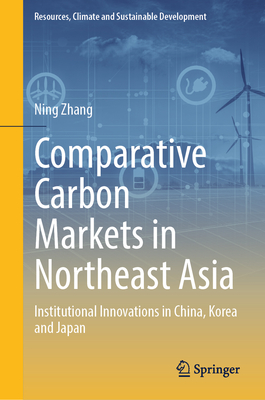
This book offers a comprehensive framework for comparing Northeast Asia's market-based climate and energy policies, integrating carbon market theories, empirical data from China, South Korea, Japan, and practical policy cases. It bridges theory and regional practice, analyzing how the three nations--at distinct development stages--design tools to balance emission cuts, energy security, and economic growth. It covers core mechanisms: China's national ETS (the world's largest, covering 8 billion tons of emissions) and energy use rights trading; South Korea's K-ETS (Asia's first mandatory carbon market) with "auction + free allocation" and price stabilization tools (floor price, market reserve); Japan's GX-ETS featuring central-local dual-track and voluntary-to-mandatory transition. Applying a four-dimensional framework (policy design, economic efficiency, innovation incentives, environmental effectiveness), it quantifies differences in quota allocation, carbon price volatility, green innovation, and emission reduction effects. Special focus is on heavy industries (steel, cement, aluminum), comparing technological routes (China's electric arc furnace steel, South Korea's hydrogen metallurgy, Japan's CCUS) and carbon cost pass-through. This book is a key resource for advanced students in environmental economics/climate policy, and researchers, policymakers, and industry leaders in Northeast Asia's climate governance. Its empirical data (quota tables, carbon price trends, industrial metrics) and policy roadmaps add value, especially for new analysts. Key features: - Links global climate theories to Northeast Asia's policy innovations. - Specialized chapters on heavy industry decarbonization. - Actionable roadmap for regional carbon market linkage (China-South Korea allowance mutual recognition, China-Japan offset alignment). - Data from official sources (China's MEE, South Korea's MOE, Japan's METI). Readers gain theoretical insights into regional policy differences and practical tools for policy design, industrial decarbonization, and regional climate cooperation.
商品描述(中文翻譯)
本書提供了一個全面的框架,用於比較東北亞的市場導向氣候與能源政策,整合了碳市場理論、中國、南韓和日本的實證數據以及實際政策案例。它橋接了理論與區域實踐,分析這三個國家在不同發展階段如何設計工具,以平衡減排、能源安全和經濟增長。
本書涵蓋了核心機制:中國的國家碳排放交易系統(ETS,全球最大的,涵蓋80億噸排放)和能源使用權交易;南韓的K-ETS(亞洲首個強制性碳市場),採用「拍賣 + 免費分配」及價格穩定工具(底價、市場儲備);日本的GX-ETS,特點是中央與地方的雙軌制以及自願轉為強制的過渡。通過應用四維框架(政策設計、經濟效率、創新激勵、環境效益),量化配額分配、碳價波動、綠色創新和減排效果的差異。特別關注重工業(鋼鐵、水泥、鋁),比較技術路徑(中國的電弧爐鋼、南韓的氫冶金、日本的CCUS)和碳成本轉嫁。
本書是環境經濟學/氣候政策高級學生以及東北亞氣候治理的研究人員、政策制定者和行業領袖的重要資源。其實證數據(配額表、碳價趨勢、行業指標)和政策路線圖為新分析師提供了額外的價值。
主要特點:
- 將全球氣候理論與東北亞的政策創新聯繫起來。
- 專門章節探討重工業脫碳。
- 提供可行的區域碳市場聯結路線圖(中國-南韓配額互認、中國-日本抵消對接)。
- 數據來自官方來源(中國生態環境部、南韓環境部、日本經濟產業省)。
讀者將獲得對區域政策差異的理論見解以及政策設計、工業脫碳和區域氣候合作的實用工具。
作者簡介
Prof. Ning Zhang, Professor at Yonsei University's School of Economics, also served as Distinguished Professor at Shandong University and Senior Fellow at Cambridge University. He is also a 5-time Clarivate Highly Cited Researcher (2020-2024), he ranks among Stanford's Top 2% Scientists 2020-2025). His 150+ publications in Science, Nature, PNAS and Journal of Development Economics focus on climate change and environmental economics.
作者簡介(中文翻譯)
張寧教授,延世大學經濟學院教授,曾擔任山東大學特聘教授及劍橋大學高級研究員。他是五次獲得Clarivate高被引研究者(2020-2024),並在2020-2025年期間名列史丹佛大學前2%的科學家。他在《科學》、《自然》、《美國國家科學院院刊》和《發展經濟學期刊》上發表的150多篇論文,專注於氣候變遷和環境經濟學。