商品描述
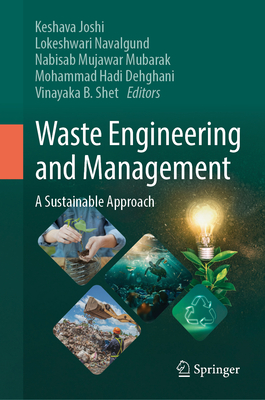
The ever increasing global waste generation crisis demands innovative and sustainable solutions that go beyond traditional management practices. This book addresses the key challenges posed by waste across water, air, and land, presenting engineered strategies for sustainable management. Waste Engineering and Management - A Sustainable Approach brings together leading international experts to explore advanced valorization technologies, circular economy models, and green engineering innovations that transform waste into wealth. This comprehensive volume presents a multidisciplinary framework integrating environmental engineering, biotechnology, materials science, and policy perspectives to achieve sustainable waste utilization. By addressing the full spectrum of waste--from agricultural, municipal, and industrial to electronic, plastic, marine, and hazardous--the book provides actionable pathways toward achieving the United Nations Sustainable Development Goals (SDGs) and building a circular, resource-efficient future. With contributions from renowned scholars and researchers worldwide, the book highlights cutting-edge strategies, real-world case studies, and life-cycle-based approaches to maximize resource recovery and minimize environmental footprints. Whether you are a researcher, engineer, student, or policymaker, this book equips you with the knowledge and tools needed to understand and implement next-generation waste management for a cleaner, greener future. This edited volume bridges the gap between waste management theory and sustainable engineering practice. It introduces readers to state-of-the-art valorisation technologies and policy mechanisms that can revolutionize waste handling and promote global sustainability. Waste Engineering and Management - A Sustainable Approach is an indispensable resource for advancing knowledge, innovation, and practice in environmental and waste management disciplines.
商品描述(中文翻譯)
全球日益增加的廢物產生危機要求創新且可持續的解決方案,超越傳統的管理實踐。本書針對水、空氣和土地等方面的廢物所帶來的主要挑戰,提出可持續管理的工程策略。《廢物工程與管理:可持續方法》匯集了國際領先的專家,探討先進的價值化技術、循環經濟模型和綠色工程創新,將廢物轉化為財富。本書提供了一個綜合性的多學科框架,整合環境工程、生物技術、材料科學和政策視角,以實現可持續的廢物利用。通過涵蓋農業、城市、工業到電子、塑料、海洋和危險廢物的全範圍,該書提供了可行的途徑,以實現聯合國可持續發展目標(SDGs),並建立一個循環、資源高效的未來。來自全球知名學者和研究者的貢獻,突顯了前沿策略、實際案例研究和基於生命週期的方法,以最大化資源回收並最小化環境足跡。無論您是研究人員、工程師、學生還是政策制定者,本書都為您提供了理解和實施下一代廢物管理所需的知識和工具,以實現更清潔、更綠色的未來。本編輯卷橋接了廢物管理理論與可持續工程實踐之間的鴻溝。它向讀者介紹了最先進的價值化技術和政策機制,這些技術和機制可以徹底改變廢物處理並促進全球可持續性。《廢物工程與管理:可持續方法》是推進環境和廢物管理學科知識、創新和實踐的不可或缺的資源。
作者簡介
Dr. Keshava Joshi is the Dean (Administration) and an Associate Professor in the Department of Chemical Engineering at SDM College of Engineering and Technology, Dharwad, Karnataka, India. He obtained his Ph.D. in Chemical Engineering from the National Institute of Technology Karnataka (NITK), Surathkal, specializing in Denitrification in a Spouted Bed Reactor. With over 22 years of academic experience and a decade of active research, his areas of expertise include environmental biotechnology, advanced wastewater treatment, process modelling, and nanotechnology. He has successfully executed a Vision Group of Science and Technology (VGST), Bangalore-sponsored research project (Rs. 20 lakh) as Principal Investigator on Denitrification of Municipal Wastewater using a Spouted Bed Reactor. Additionally, he serves as Co-Principal Investigator for two other VGST-funded projects worth Rs.20 lakh each, focusing on air quality modelling and nanotechnology applications. He has published more than 40 research papers and book chapters in reputed scopus-indexed international journals. He has presented his work at numerous national and international conferences, earning several Best Paper Awards. He also serves as a peer reviewer for many leading scientific journals, contributing actively to the academic and research community. Dr. Lokeshwari Navalgund is an Associate Professor in the Department of Chemical Engineering at SDM College of Engineering and Technology, Dharwad, Karnataka, India. She obtained her Ph.D. from the National Institute of Technology Karnataka (NITK), Surathkal, specializing in Air Quality Modelling using Remote Sensing (RS) and Geographic Information Systems (GIS). With over 22 years of academic experience and a decade of dedicated research, Dr. Navalgund's research interests encompass air and water quality modelling, adsorption, advanced wastewater treatment, and nanotechnology. She has published more than 40 research papers and book chapters in reputed scopus-indexed journals. She has actively participated in numerous national and international conferences and has received several Best Paper Awards for her research contributions. Dr. Navalgund has also successfully completed a Vision Group of Science and Technology, Bangalore sponsored research project worth Rs.20 lakh, titled Source Apportionment Studies for Hubli-Dharwad City. She serves as a peer reviewer for several leading journals in the domains of chemical, environmental, and nanotechnology research. Dr. Nabisab Mujawar Mubarak is an Associate Professor in the Department of Chemical Engineering, College of Engineering, Imam Mohammad Ibn Saud Islamic University (IMSIU), Riyadh 11432, Saudi Arabia. He is a scientific reviewer for numerous journals in Chemical Engineering and Nanotechnology. In research, Dr. Mubarak has published over 460 journal papers and 40 conference proceedings, authored 85 book chapters, and has an H-index of 88. His areas of interest include the synthesis of carbon nanomaterials, the production of magnetic biochar via microwave heating, and wastewater treatment using advanced materials. He received the Curtin Malaysia Most Productive Research Award, the Outstanding Faculty of Chemical Engineering Award, the Best Scientific Research Award in London, and the Exceptional Scientist Award in publication and citation by i-Proclaim, Malaysia. Since 2020, he has also been listed among the top 2% of the world's most influential scientists in the fields of chemistry and energy. The List of the Top 2% of Scientists in the World, compiled and published by Stanford University, is based on international scientific publications, the number of scientific citations for research, and participation in the review and editing of scientific research. Dr. Mubarak is a Fellow Member of the Institution of Engineers Australia, a Chartered Professional Engineer (CPEng) of The Institution of Engineers Australia, and a Chartered Chemical Engineer of the Institute of Chemical Engineering (IChemE), UK. He has published 11 books and is co-editor for ongoing Elsevier-edited books: 1) Nanomaterials for Carbon Capture and Conversion Technique, 2) Advanced Nanomaterials and Nanocomposites for Bioelectrochemical Systems, 3) Water Treatment Using Engineered Carbon Nanotubes,4) Hybrid Nanomaterials for Sustainable Applications: Case Studies and Applications, 5), Sustainable Nanotechnology for Environmental Remediation, 6) Nanotechnology for Biomedical Applications,7) Nanotechnology for Electronic Applications, 8) Application of Bio-Additives for the Food Industry, 9) Contemporary Nanomaterials in Material Engineering Applications, 10)Fundamentals of Biomaterials: A Supplementary Textbook, 11) Emerging Water Pollutants: Concerns and Remediation Technologies 12) Advances in Treatment Methods Towards Emerging Contaminants Sources, Occurrences and Health Effects. Prof. Dr. Mohammad Hadi Dehghani is a full professor at the Tehran University of Medical Sciences (TUMS), School of Public Health, Department of Environmental Health Engineering, Tehran, Islamic Republic of Iran. His scientific research interests include environmental science. He is the author of various research studies published in national and international journals and conference proceedings, and head of several research projects at the TUMS. He has authored 20 books, 30 book chapters, and more than 280 full papers published in peer-reviewed journals. He is an editorial board member, guest editor, and reviewer in many internal and international journals and a member of several international science committees worldwide. He is also included in the ESI Top 1% of researchers worldwide. He is a supervisor and advisor for many PhD and MSc theses at the TUMS. He is also currently a member of the Iranian Association of Environmental Health (IAEH) and the Institute for Environmental Research (IER) at TUMS. He is an editor for 16 edited books (English): (1) Soft Computing Techniques in Solid Waste and Wastewater Management, (2) Environmental and Health Management of Novel Coronavirus Disease (COVID-19), (3) Green Technologies for the Defluoridation of Water, (4) Pesticide Remediation Technologies From Water and Wastewater, (5) COVID-19 and Sustainable Development Goals, (6) Industrial Wastewater Treatment: Emerging Technologies for Sustainability, (7) Sustainable Materials for Sensing and Remediation of Noxious Pollutants, (8) Wastewater-Based Epidemiology for the Assessment of Human Exposure to Environmental Pollutants, (9) Water Treatment Using Engineered Carbon Nanotubes, (10) Water, the Environment and the Sustainable Development Goals, (11) Sustainable Remediation Technologies for Emerging Pollutants in Aqueous Environment, (12) Health and Environmental Effects of Ambient Air Pollution, (13) Health Effects of Indoor Air Pollution, (14) Diseases Attributed to Air Pollution, (15) Biotechnology Engineering, (16) Ultrasonic Treatment of Water and Wastewater. Dr. Vinayaka B. Shet is an Associate Professor in the Department of Biotechnology Engineering, NMAMIT, off-campus centre, Nitte (Deemed to be university), Nitte, Karnataka, India. He holds a Ph.D. in Biotechnology from VTU Belagavi, an M.Tech. in Industrial Biotechnology from the National Institute of Technology Karnataka (NITK), and a B.E. in Biotechnology from P.A. College of Engineering, Mangaluru. He has over 18 years of experience in Academics, 10 years in Research, and 1 year in Industry. He received a young researcher award. He has published over 30 research articles and 10 book chapters and holds two Indian patents. He is a reviewer of various journals. He serves as Coordinator (Accreditation and Compliance) at Nitte (Deemed to be University), Mangaluru, India. His Research Interests include Biomass pretreatment, Bioprocess development, Fermentation, Indian traditional knowledge, Oenology, Optimization, Synthesis of nanoparticles and their applications.
作者簡介(中文翻譯)
喬希博士 (Dr. Keshava Joshi) 是印度卡納塔克邦達爾瓦德 SDM 工程技術學院化學工程系的行政院長及副教授。他在卡納塔克國立技術學院 (NITK) 蘇拉特卡爾獲得化學工程博士學位,專攻噴流床反應器中的脫氮技術。擁有超過 22 年的學術經驗及十年的活躍研究,他的專業領域包括環境生物技術、高級廢水處理、過程建模及奈米技術。他成功執行了一個由班加羅爾科學與技術願景小組 (VGST) 贊助的研究項目(200 萬印度盧比),擔任主要研究者,研究主題為使用噴流床反應器對市政廢水進行脫氮。此外,他還擔任另外兩個 VGST 資助項目的共同主要研究者,每個項目價值 200 萬印度盧比,專注於空氣質量建模及奈米技術應用。他在知名的 Scopus 索引國際期刊上發表了超過 40 篇研究論文和書籍章節,並在多個國內外會議上展示他的研究成果,獲得多個最佳論文獎。他還擔任多本領先科學期刊的同行評審,積極貢獻於學術和研究社群。
納瓦爾根德博士 (Dr. Lokeshwari Navalgund) 是印度卡納塔克邦達爾瓦德 SDM 工程技術學院化學工程系的副教授。她在卡納塔克國立技術學院 (NITK) 蘇拉特卡爾獲得博士學位,專攻使用遙感 (RS) 和地理資訊系統 (GIS) 的空氣質量建模。擁有超過 22 年的學術經驗及十年的專注研究,納瓦爾根德博士的研究興趣包括空氣和水質建模、吸附、高級廢水處理及奈米技術。她在知名的 Scopus 索引期刊上發表了超過 40 篇研究論文和書籍章節,並積極參加多個國內外會議,因其研究貢獻獲得多個最佳論文獎。納瓦爾根德博士還成功完成了一個由班加羅爾科學與技術願景小組贊助的研究項目,價值 200 萬印度盧比,題為「哈布利-達爾瓦德市的源解析研究」。她擔任多本化學、環境及奈米技術研究領域的領先期刊的同行評審。
穆巴拉克博士 (Dr. Nabisab Mujawar Mubarak) 是沙烏地阿拉伯利雅德伊瑪目穆罕默德伊本沙烏德伊斯蘭大學 (IMSIU) 工程學院化學工程系的副教授。他是多本化學工程和奈米技術期刊的科學評審。穆巴拉克博士在研究方面發表了超過 460 篇期刊論文和 40 篇會議論文,撰寫了 85 篇書籍章節,並擁有 88 的 H 指數。他的研究興趣包括碳奈米材料的合成、通過微波加熱生產磁性生物炭,以及使用先進材料的廢水處理。他獲得了馬來西亞科廷大學最具生產力研究獎、化學工程傑出教職員獎、倫敦最佳科學研究獎及馬來西亞 i-Proclaim 出版和引用的傑出科學家獎。自 2020 年以來,他也被列入全球化學和能源領域最具影響力的 2% 科學家名單。這份由史丹佛大學編制和發布的全球前 2% 科學家名單是基於國際科學出版物、研究的科學引用數量以及參與科學研究的評審和編輯工作。穆巴拉克博士是澳大利亞工程師學會的會士、澳大利亞工程師學會的特許專業工程師 (CPEng) 及英國化學工程學會 (IChemE) 的特許化學工程師。他已出版 11 本書籍,並擔任正在進行的 Elsevier 編輯書籍的共同編輯,包括:1) 碳捕集與轉化技術的奈米材料,2) 用於生物電化學系統的先進奈米材料和奈米複合材料,3) 使用工程碳奈米管的水處理,4) 可持續應用的混合奈米材料:案例研究和應用,5) 環境修復的可持續奈米技術,6) 生物醫學應用的奈米技術,7) 電子應用的奈米技術,8) 食品工業的生物添加劑應用,9) 材料工程應用中的當代奈米材料,10) 生物材料的基本原理:補充教科書,11) 新興水污染物:關注與修復技術,12) 針對新興污染物來源、出現及健康影響的處理方法進展。
德赫甘尼教授 (Prof. Dr. Mohammad Hadi Dehghani) 是伊朗德黑蘭醫科大學 (TUMS) 公共衛生學院環境健康工程系的正教授。他的科學研究興趣包括環境科學。他是多項研究的作者,這些研究發表在國內外期刊和會議論文集中,並且是 TUMS 多個研究項目的負責人。他已撰寫 20 本書籍、30 篇書籍章節,以及在同行評審期刊上發表超過 280 篇完整論文。他是多本國內外期刊的編輯委員會成員、特邀編輯和評審,並且是全球多個國際科學委員會的成員。他也被列入 ESI 全球前 1% 研究人員名單。他是 TUMS 多篇博士和碩士論文的指導教授和顧問。目前,他也是伊朗環境健康協會 (IAEH) 和 TUMS 環境研究所 (IER) 的成員。他是 16 本編輯書籍的編輯(英文):(1) 固體廢物和廢水管理中的軟計算技術,(2) 新型冠狀病毒病 (COVID-19) 的環境與健康管理,(3) 水的去氟化綠色技術,(4) 水和廢水中的農藥修復技術,(5) COVID-19 與可持續發展目標,(6) 工業廢水處理:可持續性的新興技術,(7) 用於感測和修復有害污染物的可持續材料,(8) 基於廢水的流行病學以評估人類對環境污染物的暴露,(9) 使用工程碳奈米管的水處理,(10) 水、環境與可持續發展目標,(11) 水環境中新興污染物的可持續修復技術,(12) 環境空氣污染的健康與環境影響,(13) 室內空氣污染的健康影響,(14) 與空氣污染相關的疾病,(15) 生物技術工程,(16) 水和廢水的超聲波處理。
謝特博士 (Dr. Vinayaka B. Shet) 是印度卡納塔克邦 Nitte (被認定為大學) NMAMIT 生物技術工程系的副教授。他擁有 VTU Belagavi 的生物技術博士學位、卡納塔克國立技術學院 (NITK) 的工業生物技術碩士學位,以及 P.A. 工程學院 (Mangaluru) 的生物技術學士學位。他在學術界擁有超過 18 年的經驗,研究經驗 10 年,產業經驗 1 年。他獲得了青年研究者獎。他已發表超過 30 篇研究文章和 10 篇書籍章節,並擁有兩項印度專利。他是多本期刊的評審。他擔任 Nitte (被認定為大學) 的協調員(認證與合規),位於印度 Mangaluru。他的研究興趣包括生物質預處理、生物過程開發、發酵、印度傳統知識、釀酒學、優化、奈米顆粒的合成及其應用。