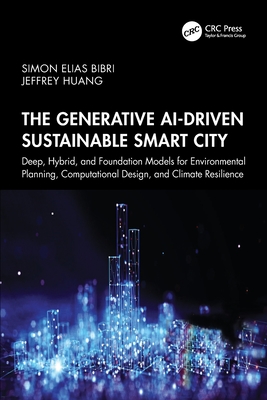
The Generative Ai-Driven Sustainable Smart City: Deep, Hybrid, and Foundation Models for Environmental Planning, Computational Design, and Climate Res
暫譯: 生成式人工智慧驅動的可持續智慧城市:環境規劃、計算設計與氣候韌性的深度、混合及基礎模型
Bibri, Simon Elias, Huang, Jeffrey
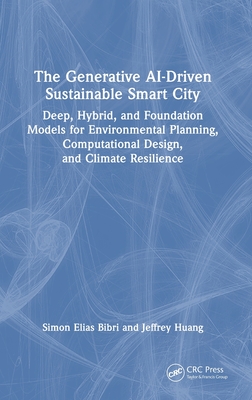
- 出版商: CRC
- 出版日期: 2026-04-28
- 售價: $9,070
- 貴賓價: 9.5 折 $8,616
- 語言: 英文
- 頁數: 506
- 裝訂: Hardcover - also called cloth, retail trade, or trade
- ISBN: 1041094485
- ISBN-13: 9781041094487
-
相關分類:
DeepLearning
海外代購書籍(需單獨結帳)
相關主題

商品描述
The rapid rise of generative artificial intelligence (GenAI) is reshaping urban computing and intelligence, marking the next frontier of sustainable smart cities. This book explores the transformative potential of deep generative models (DGMs), hybrid architectures, and foundation models (FMs) in redefining the urban landscape. These technologies enhance environmental sustainability, climate resilience, infrastructure performance, operational efficiency, spatial organization, and livability through innovative approaches to urban planning, design, and management--often via digital twins and other emerging technologies.
DGMs enable synthetic data generation, data augmentation, data imputation, scenario simulation, and predictive modeling, offering deeper insights into complex urban and environmental systems. Hybrid architectures integrate generative and conventional models to improve robustness, scalability, adaptability, and flexibility across diverse urban operational and planning tasks. FMs extend these capabilities by enabling multi-modal knowledge generalization, cross-domain integration, large-scale simulation, advanced reasoning, and adaptive decision-making under uncertainty. Strengthened by integrative frameworks and cross-disciplinary insights, these technologies offer powerful tools for developing sophisticated urban and environmental solutions. They advance how urban ecosystems are environmentally and strategically planned, efficiently and dynamically managed, aesthetically and functionally designed, and spatially and contextually organized.
Rich in conceptual frameworks, theoretical insights, operational models, applied innovations, practical case studies, and policy guidance, this book equips researchers, planners, designers, technologists, and policymakers to harness generative intelligence in shaping adaptive, context-aware, and continuously refined urban environments that are ecologically responsible, climate-resilient, and future-ready. Essential for anyone exploring the frontier of GenAI-driven sustainable urban development, it offers actionable insights to guide the next generation of sustainable smart cities.
商品描述(中文翻譯)
生成式人工智慧(GenAI)的快速崛起正在重塑城市計算與智慧,標誌著可持續智慧城市的下一個前沿。本書探討深度生成模型(DGM)、混合架構和基礎模型(FM)在重新定義城市景觀方面的變革潛力。這些技術透過創新的城市規劃、設計和管理方法,通常是透過數位雙胞胎及其他新興技術,提升環境可持續性、氣候韌性、基礎設施性能、運營效率、空間組織和宜居性。
DGM使合成數據生成、數據增強、數據填補、情境模擬和預測建模成為可能,提供對複雜城市和環境系統的更深入見解。混合架構整合生成模型和傳統模型,以提高在多樣化城市運營和規劃任務中的穩健性、可擴展性、適應性和靈活性。FM通過實現多模態知識泛化、跨領域整合、大規模模擬、高級推理和不確定性下的自適應決策,擴展了這些能力。在整合框架和跨學科見解的加持下,這些技術為開發複雜的城市和環境解決方案提供了強大的工具。它們推進了城市生態系統在環境和戰略規劃、有效和動態管理、美學和功能設計,以及空間和情境組織方面的方式。
本書充滿概念框架、理論見解、運營模型、應用創新、實務案例研究和政策指導,幫助研究人員、規劃者、設計師、技術專家和政策制定者利用生成智慧來塑造適應性、情境感知和持續精煉的城市環境,這些環境在生態上負責任、氣候韌性強且未來就緒。對於任何探索GenAI驅動的可持續城市發展前沿的人來說,本書提供了可行的見解,以指導下一代可持續智慧城市的發展。
作者簡介
Simon Elias Bibri, PhD, is a globally recognized scholar and expert in sustainable smart cities and smarter eco-cities, focusing on the integration and application of advanced technologies, particularly urban digital twins (UDTs), artificial intelligence (AI), artificial intelligence of things (AIoT), and generative artificial intelligence (GenAI), to foster innovative solutions in urban transformation and environmental sustainability. Currently, he serves as a Senior Researcher and Scientific Coordinator at the Swiss Federal Institute of Technology Lausanne (EPFL), Institute of Computer and Communication Sciences (IINFCOM), School of Architecture, Civil and Environmental Engineering (ENAC), Media and Design Laboratory (LDM). He has a diverse professional background, having served as head of the computer department, software and IT business engineer, IT project manager, green ICT and environmental sustainability strategist, research associate, assistant professor, and international expert. He was also a visiting scholar at Lund University and a visiting senior researcher at Royal Institute of Technology (KTH) in Sweden. He served as an international expert in Artificial Intelligence and Applied Machine Learning for Climate Action for UNFCCC and an international expert in Sustainable Cities for UNIDO. He currently serves as an expert for Focus Group for Smart Sustainable Cities, Environmental Sustainability, and Digital Twins for ITU. He also holds the position of the Editor-in-Chief of the International Journal of Environmental Studies at Taylor & Francis Group and the Associate Editor of the Journal of Sustainable Cities and Society.
Dr. Bibri's academic journey exemplifies both interdisciplinarity and transdisciplinarity. His intellectual background encompasses computer science, computer engineering, systems science, innovation science, environmental science, social sciences, and humanities. He holds a bachelor's degree in computer engineering and a postgraduate degree in management science. Notably, he earned multiple master's degrees from esteemed Swedish universities, namely Lund University, West University, Blekinge Institute of Technology, Stockholm University, Malmö University, and Mid-Sweden University. He received his PhD in computer science and information technology from the Norwegian University of Science and Technology (NTNU), specializing in computational technology and urban informatics, with a focus on data-driven smart sustainable cities. Dr. Bibri is a prolific scholar with numerous highly cited journal articles, 9 authored books, 3 edited works, and 13 co-edited volumes to his credit. His work has been cited over 15,250 times, resulting in an h-index of 55. His impact has been recognized by Stanford University and Elsevier as among the top 1% of scientists worldwide, a distinction he has held for six consecutive years. He has also been listed by ScholarGPS as the #1 highly ranked scholar in sustainable cities, #2 in urbanism, and #8 in environmental sustainability in the world.
Dr. Bibri's research interests and expertise cover a broad spectrum of areas, including sustainable cities, smarter eco-cities, sustainable smart cities, urban artificial intelligence, urban artificial intelligence of things, urban generative artificial intelligence, urban generative artificial intelligence of things, urban digital twin, smart urban metabolism, urban circularity, cyber-physical systems of systems, urban planning and design, environmental governance, environmental sustainability, climate change mitigation and adaptation, smart sustainable energy, smart sustainable transportation, smart sustainable waste management, sustainability transitions, and technological innovation systems.
Jeffrey Huang, PhD, is the Director of the Institute of Architecture and the City at the Swiss Federal Institute of Technology Lausanne (EPFL), Switzerland. He is also the Head of the Media and Design Laboratory (LDM) and a Full Professor in Architecture and Computer Science at EPFL. He holds a DiplArch from ETH Zurich, and master's and doctoral degrees from Harvard University, where he was awarded the Gerald McCue Medal for academic excellence. Prior to EPFL, he was a Researcher at MIT's Sloan School of Management, and an Associate Professor at Harvard University's Graduate School of Design. He was also a Visiting Professor at Tsinghua University, a Visiting Fellow at Stanford University's d.school, an Honorary Visiting Professor at the University of Sheffield, and a Berkman Fellow and Faculty Associate at Harvard. In collaboration with Muriel Waldvogel, he founded and co-heads Convergeo, an award-winning, international strategic design firm.
作者簡介(中文翻譯)
西門·伊利亞斯·比布里(Simon Elias Bibri),博士,是一位全球公認的學者和專家,專注於可持續智慧城市和更智慧的生態城市,致力於先進技術的整合與應用,特別是城市數位雙胞胎(Urban Digital Twins, UDTs)、人工智慧(Artificial Intelligence, AI)、物聯網人工智慧(Artificial Intelligence of Things, AIoT)和生成式人工智慧(Generative Artificial Intelligence, GenAI),以促進城市轉型和環境可持續性的創新解決方案。目前,他擔任瑞士洛桑聯邦理工學院(Swiss Federal Institute of Technology Lausanne, EPFL)計算機與通信科學研究所(Institute of Computer and Communication Sciences, IINFCOM)建築、土木與環境工程學院(School of Architecture, Civil and Environmental Engineering, ENAC)媒體與設計實驗室(Media and Design Laboratory, LDM)的高級研究員和科學協調員。他擁有多元的專業背景,曾擔任計算機部門負責人、軟體與IT商業工程師、IT專案經理、綠色ICT與環境可持續性策略師、研究助理、副教授及國際專家。他曾是隆德大學的訪問學者,以及瑞典皇家理工學院(Royal Institute of Technology, KTH)的訪問高級研究員。他曾擔任聯合國氣候變化框架公約(UNFCCC)人工智慧與應用機器學習氣候行動的國際專家,以及聯合國工業發展組織(UNIDO)可持續城市的國際專家。目前,他擔任國際電信聯盟(ITU)智慧可持續城市、環境可持續性和數位雙胞胎的專家。他還擔任泰勒與法蘭西斯集團(Taylor & Francis Group)《國際環境研究期刊》(International Journal of Environmental Studies)的主編,以及《可持續城市與社會期刊》(Journal of Sustainable Cities and Society)的副編輯。
比布里博士的學術旅程體現了跨學科和超學科的特徵。他的智識背景涵蓋計算機科學、計算機工程、系統科學、創新科學、環境科學、社會科學和人文學科。他擁有計算機工程學士學位和管理科學的研究生學位。值得注意的是,他從瑞典多所著名大學獲得多個碩士學位,包括隆德大學、西部大學、布萊金厄科技學院、斯德哥爾摩大學、馬爾默大學和中瑞典大學。他在挪威科技大學(Norwegian University of Science and Technology, NTNU)獲得計算機科學與資訊技術的博士學位,專攻計算技術和城市資訊學,重點研究數據驅動的智慧可持續城市。比布里博士是一位多產的學者,擁有多篇被高度引用的期刊文章、9本著作、3部編輯作品和13部共同編輯的專著。他的研究成果被引用超過15,250次,h指數為55。他的影響力被斯坦福大學和Elsevier認可為全球前1%的科學家,這一榮譽他已連續保持六年。他還被ScholarGPS列為全球可持續城市領域排名第一的學者、城市學排名第二和環境可持續性排名第八的學者。
比布里博士的研究興趣和專業涵蓋廣泛的領域,包括可持續城市、更智慧的生態城市、可持續智慧城市、城市人工智慧、城市物聯網人工智慧、城市生成式人工智慧、城市生成式物聯網人工智慧、城市數位雙胞胎、智慧城市代謝、城市循環性、網路物理系統、城市規劃與設計、環境治理、環境可持續性、氣候變遷緩解與適應、智慧可持續能源、智慧可持續交通、智慧可持續廢物管理、可持續轉型和技術創新系統。
黃傑夫(Jeffrey Huang),博士,是瑞士洛桑聯邦理工學院(EPFL)建築與城市研究所的所長。他同時擔任媒體與設計實驗室(Media and Design Laboratory, LDM)的負責人,以及EPFL建築與計算機科學的全職教授。他擁有蘇黎世聯邦理工學院(ETH Zurich)的建築學學位,以及哈佛大學的碩士和博士學位,並因學術卓越獲得傑拉爾德·麥基獎(Gerald McCue Medal)。在加入EPFL之前,他曾是麻省理工學院(MIT)斯隆管理學院的研究員,以及哈佛大學設計研究生院的副教授。他還曾擔任清華大學的訪問教授、斯坦福大學d.school的訪問研究員、謝菲爾德大學的榮譽訪問教授,以及哈佛大學的伯克曼研究員和教職員。他與穆里爾·瓦爾德沃格(Muriel Waldvogel)合作創立並共同負責Convergeo,一家獲獎的國際戰略設計公司。