商品描述
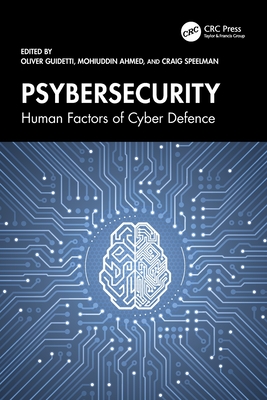
Psybersecurity: Human Factors of Cyber Defence is a clarion call to action in the face of a stark reality: over 90% of cyberattacks exploit human vulnerabilities, as highlighted by the 2022 Global Risks Report from the World Economic Forum. This gap between the rapid advancement of cyber security technologies and the slower pace of development in human-centric defences poses a formidable challenge to national security and personal safety. Amidst the dazzling progress of AI technologies like ChatGPT and Microsoft Security Co-Pilot, the human element of cyber security remains critically underdeveloped.
Set against the backdrop of the Australian government's ambitious goal to become the world's most cybersecure nation by 2030, this book embarks on a mission to address the overlooked human factors in cyber defence. It advocates for a balanced approach that not only relies on technological advancements but also significantly enhances the human aspects of cyber security.
Through an interdisciplinary exploration, Psybersecurity delves into how cyberthreats exploit human vulnerabilities and offers innovative solutions for building resilience against these vulnerabilities. It examines the necessity for cyber security strategies that encompass psychological insights, systemic resilience, and the mitigation of human errors, particularly within critical infrastructures and cyber-physical systems (CPS).
Furthermore, this work critiques existing cyber security education frameworks, proposing a comprehensive curriculum that equips individuals with technical skills and the behavioural competencies needed to navigate the cyber landscape ethically and effectively. It also addresses AI's ethical dilemmas and psychological impacts, offering a forward-looking perspective on combating AI-driven harassment and endorsing a new field of study: "Psybersecurity."
Psybersecurity: Human Factors of Cyber Defence aims to bridge the gap between cyber security and human sciences, ignite a transformation in understanding, and fortify our digital world. It is an essential read for academics, professionals, and anyone committed to building a safer, more resilient cyber future in alignment with Australia's 2030 vision.
商品描述(中文翻譯)
《心理安全:網路防禦中的人因因素》是一個面對嚴峻現實的號召:根據世界經濟論壇2022年全球風險報告,超過90%的網路攻擊利用了人類的脆弱性。網路安全技術的快速進步與以人為中心的防禦發展速度較慢之間的差距,對國家安全和個人安全構成了巨大的挑戰。在像ChatGPT和Microsoft Security Co-Pilot這樣的人工智慧技術驚人進展的背景下,網路安全的人類因素仍然嚴重不足。
在澳大利亞政府雄心勃勃的目標下,力求到2030年成為全球最具網路安全的國家,本書著手解決在網路防禦中被忽視的人因因素。它提倡一種平衡的方法,不僅依賴技術進步,還顯著增強網路安全的人類方面。
透過跨學科的探索,《心理安全》深入探討網路威脅如何利用人類的脆弱性,並提供創新的解決方案,以建立對這些脆弱性的韌性。它檢視了網路安全策略的必要性,這些策略應該包含心理學見解、系統韌性以及減少人為錯誤,特別是在關鍵基礎設施和網路物理系統(CPS)中。
此外,本書批評現有的網路安全教育框架,提出一個全面的課程,讓個人具備技術技能和行為能力,以道德和有效的方式應對網路環境。它還探討了人工智慧的倫理困境和心理影響,提供了一個前瞻性的觀點,針對AI驅動的騷擾進行反擊,並支持一個新的研究領域:「心理安全」。
《心理安全:網路防禦中的人因因素》旨在彌合網路安全與人文科學之間的鴻溝,激發理解的轉變,並加強我們的數位世界。這是學術界、專業人士以及任何致力於建立更安全、更具韌性的網路未來的人必讀的書籍,與澳大利亞2030願景相一致。
作者簡介
Oliver Guidetti is a postdoctoral researcher specialising in the human factors of cyber security. He has an extensive background working on applied socio-technical projects that examine the interplay between the human brain and technology. His PhD research focused on measuring and mitigating vigilance decrement in cyber network defence tasks. Guidetti has published numerous research papers on topics such as cyber vigilance tasks, the neuropsychology of network defence operators, human resource policy in relation to neurotechnology, and the effects of cognitive load on the performance of cyber first responders. Through his work, he hopes to contribute to our increasingly digital world's socio-technical security and resilience.
Mohiuddin Ahmed is a Senior Lecturer of Computing and Security Discipline at the School of Science, Edith Cowan University, Australia. He earned his PhD in computer science from the University of New South Wales in 2016. He is a member of the Association for Computing Machinery (ACM), the Australian Information Security Association (AISA), a senior member of the Institute of Electrical and Electronics Engineers (IEEE), a Certified Professional of the Australian Computer Society (ACS), and a Fellow of the Higher Education Academy, UK. He is also an ACM Distinguished Speaker and delivered several keynotes and invited talks on cyber security. He has been educating the next generation of cyber leaders and researching to disrupt the cybercrime ecosystem. His research is focused on ensuring national security and safeguarding critical infrastructures from cyber terrorists. He secured several external and internal grants worth more than AU$1.7 million and has been collaborating with academia and industry.
Craig Speelman has been Professor in the School of Psychology and Social Science, Edith Cowan University, since 2008. He was Head of the School between 2002-2011. Speelman conducts research in the general area of cognitive psychology, but much of his research has focused on the topic of skill acquisition and transfer. He is the author of Beyond the Learning Curve: The Construction of Mind and several book chapters. He has edited three research volumes and also authored papers published in highly ranked journals, including the Journal of Experimental Psychology: LMC, Nature Scientific Reports, Frontiers in Psychology, The American Journal of Geriatric Psychiatry, and PLOS ONE. He has received funding from the Australian Research Council, Health Workforce Australia, and the Association of Independent Schools (AISWA). He has served on editorial boards of journals and was the editor-in-chief of the GSTF Journal of Psychology. He has served on the organising committees for national and international psychology conferences. Speelman has applied this expertise to developing a training program for acquiring skin cancer detection skills, the development of basic arithmetic skills, where he produced the commercial app Numbeat, and psychological aspects of cyber security.
作者簡介(中文翻譯)
奧利佛·吉德提 (Oliver Guidetti) 是一位專注於網路安全人因因素的博士後研究員。他擁有豐富的背景,從事應用社會技術專案,研究人腦與技術之間的相互作用。他的博士研究專注於測量和減輕網路防禦任務中的警覺性下降。吉德提已發表多篇研究論文,主題包括網路警覺性任務、網路防禦操作員的神經心理學、與神經技術相關的人力資源政策,以及認知負荷對網路第一反應者表現的影響。透過他的工作,他希望為我們日益數位化的世界的社會技術安全與韌性做出貢獻。
莫希尤丁·艾哈邁德 (Mohiuddin Ahmed) 是澳大利亞艾迪斯科文大學科學學院計算與安全學科的高級講師。他於2016年在新南威爾士大學獲得計算機科學博士學位。他是計算機協會 (ACM)、澳大利亞資訊安全協會 (AISA) 的成員,並且是電氣與電子工程師學會 (IEEE) 的高級會員、澳大利亞計算機學會 (ACS) 的認證專業人士,以及英國高等教育學院的院士。他也是ACM的傑出演講者,曾就網路安全發表多場主題演講和受邀演講。他一直在培養下一代網路領袖,並研究如何顛覆網路犯罪生態系統。他的研究專注於確保國家安全並保護關鍵基礎設施免受網路恐怖分子的威脅。他獲得了超過170萬澳元的多項外部和內部資助,並與學術界和產業界進行合作。
克雷格·斯皮爾曼 (Craig Speelman) 自2008年以來一直擔任艾迪斯科文大學心理學與社會科學學院的教授。他在2002年至2011年間擔任該學院院長。斯皮爾曼的研究領域為認知心理學,但他的許多研究專注於技能獲得與轉移的主題。他是《超越學習曲線:心智的建構》(Beyond the Learning Curve: The Construction of Mind) 的作者,並撰寫了多篇書籍章節。他編輯了三本研究卷,並在多個高排名期刊上發表論文,包括《實驗心理學期刊:LMC》、《自然科學報告》、《心理學前沿》、《美國老年精神病學期刊》和《PLOS ONE》。他獲得了澳大利亞研究委員會、健康勞動力澳大利亞和獨立學校協會 (AISWA) 的資助。他曾擔任期刊的編輯委員會成員,並擔任《GSTF心理學期刊》的主編。他還參與了國內外心理學會議的組織委員會。斯皮爾曼將這些專業知識應用於開發皮膚癌檢測技能的培訓計劃、基本算術技能的發展,並製作了商業應用程式Numbeat,以及網路安全的心理學方面。