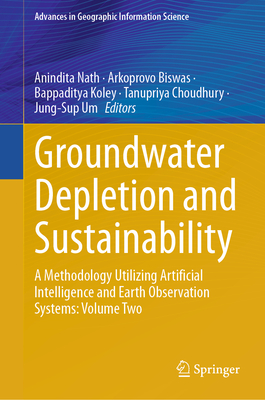
Groundwater Depletion and Sustainability: A Methodology Utilizing Artificial Intelligence and Earth Observation Systems: Volume Two
暫譯: 地下水枯竭與可持續性:利用人工智慧與地球觀測系統的方法論:第二卷
Nath, Anindita, Biswas, Arkoprovo, Koley, Bappaditya
- 出版商: Springer
- 出版日期: 2026-05-05
- 售價: $9,240
- 貴賓價: 9.5 折 $8,778
- 語言: 英文
- 頁數: 435
- 裝訂: Hardcover - also called cloth, retail trade, or trade
- ISBN: 3032197082
- ISBN-13: 9783032197085
-
相關分類:
Machine Learning、地理資訊系統 Gis
海外代購書籍(需單獨結帳)
商品描述
This contributed volume, the second in a set of two, details how Artificial Intelligence (AI) and Earth observation systems can effectively improve the prediction of groundwater quality and support decision-making in arid and semi-arid regions. Earth observation systems, including remote sensing and geographic information systems (GIS), play a crucial role in assessing and monitoring groundwater quality. Remote sensing data, such as satellite imagery, can provide valuable information on land cover, vegetation indices, and water quality parameters. GIS tools enable the spatial analysis and visualization of groundwater quality data.
AI and Earth observation-based methods support effective water resource management by identifying suitable areas for artificial groundwater recharge (AGR) and assessing the impact of pollution on water resources. These techniques help formulate conservation policies and sustainable water management strategies. Various AI techniques, including ANN, SVM, KNN, and decision trees, have been applied to model groundwater quality and predict water quality indices. These models capture complex relationships between hydro chemical parameters and groundwater quality, enabling accurate predictions and informed decision-making.
The application of AI and Earth observation systems in groundwater quality prediction contributes to the sustainability of water resources. Identifying pollution sources, assessing water quality, and guiding decision-making processes support preserving and managing water resources in arid and semi-arid regions.
商品描述(中文翻譯)
這本貢獻集是兩本書中的第二本,詳細說明了人工智慧(AI)和地球觀測系統如何有效改善地下水質的預測,並支持乾旱和半乾旱地區的決策制定。地球觀測系統,包括遙感和地理資訊系統(GIS),在評估和監測地下水質方面扮演著至關重要的角色。遙感數據,如衛星影像,可以提供有關土地覆蓋、植被指數和水質參數的寶貴信息。GIS工具使地下水質數據的空間分析和可視化成為可能。
基於AI和地球觀測的方法通過識別適合人工地下水補充(AGR)的區域和評估污染對水資源的影響,支持有效的水資源管理。這些技術有助於制定保護政策和可持續水管理策略。各種AI技術,包括人工神經網絡(ANN)、支持向量機(SVM)、K最近鄰(KNN)和決策樹,已被應用於建模地下水質和預測水質指數。這些模型捕捉了水文化學參數與地下水質之間的複雜關係,從而實現準確的預測和明智的決策。
AI和地球觀測系統在地下水質預測中的應用有助於水資源的可持續性。識別污染源、評估水質和指導決策過程支持在乾旱和半乾旱地區保護和管理水資源。