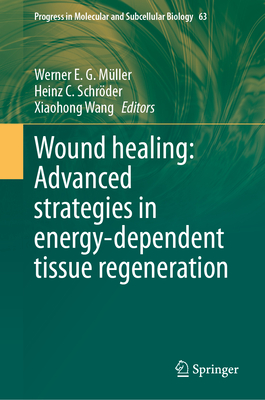
Wound Healing: Advanced Strategies in Energy-Dependent Tissue Regeneration
暫譯: 傷口癒合:能量依賴性組織再生的先進策略
Müller, Werner E. G., Schröder, Heinz C., Wang, Xiaohong
- 出版商: Springer
- 出版日期: 2026-02-25
- 售價: $8,170
- 貴賓價: 9.5 折 $7,761
- 語言: 英文
- 頁數: 322
- 裝訂: Hardcover - also called cloth, retail trade, or trade
- ISBN: 3032177707
- ISBN-13: 9783032177704
海外代購書籍(需單獨結帳)
商品描述
商品描述(中文翻譯)
本卷探討了組織再生理性策略發展的最新進展,包括傷口癒合和慢性傷口管理的方法。這些進展基於對組織修復是一個依賴能量的過程的理解,以及識別在癒合過程中幫助克服能量不足的分子。
本書還討論了控制藥物釋放系統的設計以及基於合成或生物聚合物和奈米顆粒的複合材料在組織再生和傷口修復中的開發,這些材料相比傳統材料提供了更好的性能。
來自領先研究者的貢獻提供了這一不斷發展的生物醫學研究領域中的關鍵發展和當前方向的概述。
作者簡介
Werner E.G. Müller is a renowned molecular biologist and pioneer in enzyme-mediated biomineralization, biopolymers, and biomaterials for regenerative medicine. His groundbreaking contributions span molecular evolution, the discovery of novel antiviral and anticancer agents, and the development of innovative materials for tissue regeneration. He has been awarded an ERC Advanced Investigator Grant and three ERC Proof-of-Concept Grants, underscoring the translational relevance and excellence of his research. His recent work explores energy-delivering biomaterials and nanoparticles, particularly inorganic polyphosphates, for applications in wound healing and bone/cartilage regeneration. He has coordinated numerous national and international research projects, including major EU consortia, and has been honored with several prestigious awards, most notably the Federal Cross of Merit, First Class. He is the author of over 1,300 scientific publications and holds an H-index of 123 (Google Scholar), making him one of the most highly cited researchers in his field.
Heinz C. Schröder received his doctorate in both chemistry and medicine with distinction. After postdoctoral research at the University of Mainz and the MPI for Biophysical Chemistry in Göttingen, supported by a Liebig Fellowship, as well as at the National Cancer Center in Tokyo, he has been a professor at Mainz University since 1985. He is an expert in enzymology of biomineral and RNA metabolism (discovery of several polyadenylate/2-5A enzymes). His current interest lies in the mode of action of biogenic nanoparticles. He has received several awards and authored/co-authored over 600 publications. Together with W.E.G. Müller, he was coordinator/partner in 20 EU projects.
Xiaohong Wang is a materials scientist and a professor of inorganic chemistry since 2005. Her research centers on regeneratively active biomaterials and bionanoparticles. She has made significant contributions to the understanding of biosilica and calcium carbonate formation in marine sponges, as well as biomineralization processes in human bone, including hydroxyapatite formation. Since 2006, she has actively collaborated with the group of Prof. W.E.G. Müller, joining the team formally in 2009. She has led multiple national and international research projects as principal investigator or coordinator, supported by the EU and BMBF. She has authored over 200 peer-reviewed publications in high-impact journals, with a H-index of 52 (Google Scholar), reflecting her strong influence in the fields of biomaterials, bioinorganic chemistry, and nanomedicine.
作者簡介(中文翻譯)
Werner E.G. Müller 是一位著名的分子生物學家,也是酶介導生物礦化、 生物聚合物和再生醫學生物材料的先驅。他的開創性貢獻涵蓋了分子進化、新型抗病毒和抗癌劑的發現,以及用於組織再生的創新材料的開發。他曾獲得歐洲研究委員會(ERC)高級研究員獎勵金和三項ERC概念驗證獎,這突顯了他研究的轉化相關性和卓越性。他最近的工作探索了能量傳遞生物材料和納米顆粒,特別是無機聚磷酸鹽,應用於傷口癒合和骨/軟骨再生。他協調了多個國內和國際研究項目,包括主要的歐盟聯盟,並獲得了多項著名獎項,最值得一提的是一級聯邦功勳十字勳章。他是超過1,300篇科學出版物的作者,並擁有123的H指數(Google Scholar),使他成為該領域中被引用最多的研究人員之一。
Heinz C. Schröder 以優異的成績獲得化學和醫學雙博士學位。在美因茨大學和哥廷根的生物物理化學研究所進行博士後研究,並獲得Liebig獎學金的支持,以及在東京國立癌症中心的研究後,自1985年以來一直擔任美因茨大學的教授。他是生物礦化和RNA代謝的酶學專家(發現了幾種聚腺苷酸/2-5A酶)。他目前的研究興趣在於生物源納米顆粒的作用機制。他獲得了多項獎項,並撰寫/合著了超過600篇出版物。與W.E.G. Müller一起,他在20個歐盟項目中擔任協調者/合作夥伴。
Xiaohong Wang 是一位材料科學家,自2005年以來擔任無機化學教授。她的研究集中在再生活性生物材料和生物納米顆粒上。她對海綿中的生物矽和碳酸鈣形成的理解,以及人類骨骼中的生物礦化過程(包括羥基磷灰石的形成)做出了重要貢獻。自2006年以來,她與W.E.G. Müller教授的團隊積極合作,並於2009年正式加入該團隊。她作為主要研究者或協調者領導了多個國內和國際研究項目,並獲得了歐盟和BMBF的支持。她在高影響力期刊上發表了超過200篇同行評審的出版物,擁有52的H指數(Google Scholar),反映了她在生物材料、生物無機化學和納米醫學領域的強大影響力。