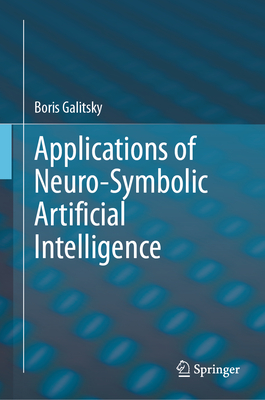
Applications of Neuro-Symbolic Artificial Intelligence
暫譯: 神經符號人工智慧的應用
Galitsky, Boris
- 出版商: Springer
- 出版日期: 2026-05-19
- 售價: $8,370
- 貴賓價: 9.5 折 $7,951
- 語言: 英文
- 頁數: 420
- 裝訂: Hardcover - also called cloth, retail trade, or trade
- ISBN: 3032165237
- ISBN-13: 9783032165237
-
相關分類:
Reinforcement
海外代購書籍(需單獨結帳)
相關主題

商品描述
This book offers a bold vision for the future of artificial intelligence, showing how the next wave of innovation will blend the power of large language models with the rigor of logical reasoning and human-like understanding. Instead of settling for systems that simply generate text, it explores how AI can be designed to think, engage, and interact in ways that feel meaningful, personal, and trustworthy.
Readers will discover how AI can move beyond common pitfalls like hallucinations through smarter frameworks that combine reinforcement learning and symbolic logic. They'll see how new approaches make AI more empathetic, more explainable, and better at understanding human intent. From copilots that supercharge social media promotion to next-generation recommendation engines for Web 3.0, the book highlights real-world applications that bring these ideas to life. It also dives into AI's role in creativity and industry, showing how it can craft compelling ad campaigns, spark invention dialogues, and even support specific fields like chemical engineering. Throughout, the focus is on building AI that doesn't just serve as a tool, but as a partner--enhancing decision-making, supporting innovation, and opening new opportunities for human-machine collaboration.
The book is a must-read for anyone curious about where AI is heading next.
商品描述(中文翻譯)
這本書為人工智慧的未來提供了一個大膽的願景,展示了下一波創新將如何將大型語言模型的力量與邏輯推理和類人理解的嚴謹性相結合。它不僅僅滿足於生成文本的系統,而是探索如何設計人工智慧,使其能以有意義、個人化和可信賴的方式進行思考、互動和交流。
讀者將會發現,人工智慧如何透過結合強化學習和符號邏輯的更智能框架,超越常見的陷阱,如幻覺。讀者將看到新的方法如何使人工智慧變得更具同理心、更具可解釋性,並更好地理解人類的意圖。從能夠強化社交媒體推廣的副駕駛到針對 Web 3.0 的下一代推薦引擎,這本書突顯了將這些理念付諸實踐的真實應用。它還深入探討了人工智慧在創造力和產業中的角色,展示了它如何創作引人注目的廣告活動、激發創新對話,甚至支持化學工程等特定領域。整體而言,重點在於構建不僅僅作為工具的人工智慧,而是作為夥伴——增強決策、支持創新,並為人機協作開啟新的機會。
這本書是任何對人工智慧未來發展感到好奇的讀者必讀之作。
作者簡介
Prof. Boris Galitsky is a cofounder of Knowledge Trail, San Jose, CA, and teaches a course on LLM-based programming at Stavropol Agrarian University. He has contributed linguistic and machine learning technologies to Silicon Valley start-ups as well as to companies such as eBay and Oracle for over 25 years. His work in information extraction and sentiment analysis supported several acquisitions, including Xoopit by Yahoo, Uptake by Groupon, LogLogic by Tibco, and Zvents by eBay. His security-related document analysis technologies also contributed to the acquisition of Elastica by Symantec.
As an architect of the Intelligent Bots project at Oracle, he developed a discourse analysis technique for dialogue management and documented this work in his book Developing Enterprise Chatbots. He also authored a two-volume monograph, AI for CRM, based on his experience developing Oracle Digital Assistant. In addition, he is an Apache committer to OpenNLP, where he created the OpenNLP Similarity component, a foundation for semantically enriched search engines and chatbot development.
Prof. Galitsky's research into the exploration and formalization of human reasoning culminated in his book Computational Autism, widely used by parents of children with autism and rehabilitation specialists. His focus on medical applications has resulted in two further research monographs: Artificial Intelligence for Healthcare Applications and Management, co-authored with Dr. Saveli Goldberg, and Health Applications of Neuro-Symbolic Artificial Intelligence.
作者簡介(中文翻譯)
教授 Boris Galitsky 是位於加州聖荷西的 Knowledge Trail 的共同創辦人,並在斯塔夫羅波爾農業大學教授基於 LLM 的程式設計課程。他在過去 25 年中為矽谷的初創公司以及 eBay 和 Oracle 等公司貢獻了語言學和機器學習技術。他在信息提取和情感分析方面的工作支持了幾次收購,包括 Yahoo 收購 Xoopit、Groupon 收購 Uptake、Tibco 收購 LogLogic 以及 eBay 收購 Zvents。他在安全相關的文件分析技術也促成了 Symantec 收購 Elastica。
作為 Oracle Intelligent Bots 項目的架構師,他開發了一種對話管理的話語分析技術,並在他的著作《開發企業聊天機器人》中記錄了這項工作。他還根據自己開發 Oracle Digital Assistant 的經驗,撰寫了一部兩卷本的專著《AI for CRM》。此外,他是 Apache OpenNLP 的委員,創建了 OpenNLP Similarity 組件,這是語義增強搜索引擎和聊天機器人開發的基礎。
Galitsky 教授對人類推理的探索和形式化的研究 culminated in his book《計算自閉症》,該書被自閉症兒童的父母和康復專家廣泛使用。他對醫療應用的關注導致了另外兩部研究專著的產生:《醫療應用的人工智慧與管理》,與 Dr. Saveli Goldberg 共同撰寫,以及《神經符號人工智慧的健康應用》。