商品描述
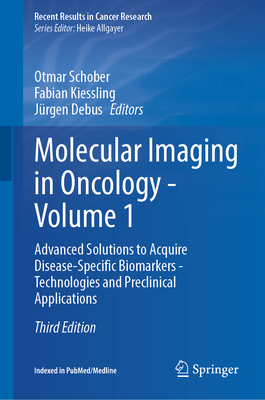
These two books cover the most significant recent advances in oncological molecular imaging, from methods and preclinical research to clinical practice. The first book is divided into two sections. The first section focuses on standardized and emerging technologies, as well as probe designs for various imaging modalities, including advanced X-ray imaging, CT, MRI, SPECT, total body PET, ultrasound, optical imaging, optoacoustic imaging, and probes for these modalities. The section also covers artificial intelligence in radiomics. The second section focuses on preclinical applications, including advanced microscopy in animal imaging. The second book presents various clinical applications of molecular imaging and related imaging features. The first section of the second book discusses the crucial, emerging role of molecular imaging in planning and monitoring oncological therapies and future challenges and prospects in multimodality imaging. The second section discusses radiotherapy approaches (photon therapy, particle therapy, and internal therapy) and theranostics. Given its scope, this handbook will benefit anyone interested in the revolution in diagnostic and therapeutic oncology brought about by molecular imaging. A third section of the second book will venture a view of future challenges.
商品描述(中文翻譯)
這兩本書涵蓋了腫瘤分子影像學最近最重要的進展,從方法和前臨床研究到臨床實踐。第一本書分為兩個部分。第一部分專注於標準化和新興技術,以及各種影像模式的探針設計,包括先進的X光影像、CT、MRI、SPECT、全身PET、超音波、光學影像、光聲影像及這些模式的探針。該部分還涵蓋了放射組學中的人工智慧。第二部分專注於前臨床應用,包括動物影像中的先進顯微鏡技術。
第二本書介紹了分子影像學及相關影像特徵的各種臨床應用。第二本書的第一部分討論了分子影像在規劃和監測腫瘤治療中的關鍵新興角色,以及多模態影像未來的挑戰和前景。第二部分討論了放射治療方法(光子治療、粒子治療和內部治療)及治療診斷學。考慮到其範疇,這本手冊將使任何對分子影像帶來的診斷和治療腫瘤學革命感興趣的人受益。第二本書的第三部分將展望未來的挑戰。
作者簡介
Otmar Schober was Director of the Department of Nuclear Medicine at the University of Münster from 1988 to 2013 and Deputy Rector of the university from 1994 to 1998. He has extensive expertise in the natural sciences and clinical medicine and has focused on imaging methods and their implementation in preclinical and clinical applications. Professor Schober completed his studies in laser physics with Herbert Welling and in surface physics with Nobel Laureate Gerhard Ertl at the Universities of Hanover and Munich. He received his medical training in Frankfurt, Hanover, and London; Heinz Hundeshagen was his mentor. From 1995 to 2003, he was a German Research Foundation expert reviewer for Radiology, Nuclear Medicine, and Radiation Biology. He has served as Editor-in-Chief of the Journal Nuklearmedizin (2001-2011) and as a coeditor of various international journals. Professor Schober served as coordinator of the Collaborative Research Center on Molecular Cardiovascular Imaging from 1999 to 2013. As a founder of the European Institute for Molecular Imaging, he was the principal investigator at the Cluster of Excellence "Cells in Motion." Fabian Kiessling leads the Institute for Experimental Molecular Imaging at the RWTH University in Aachen, where he is working to develop novel diagnostic and theranostic concepts, probes, and technologies. Professor Kiessling studied medicine at Heidelberg University and subsequently worked as a resident at the Department of Radiology, German Cancer Research Center (until the end of 2002). In 2003, he moved to the Department of Medical Physics in Radiology as leader of a Molecular Imaging Group. At the same time, he pursued his clinical training, becoming a board-certified radiologist in 2007. He is the author of more than 500 publications and book chapters and has been an editorial board member for various journals, including Radiology, European Radiology, Molecular Imaging and Biology, and npj Imaging. From 2019-2025 he was featured as Highly Cited Researcher by Clarivate Analytics and he has won a number of awards, including the Emil Salzer Prize for Cancer Research and the Richtzenhain Prize. He is a fellow of the World Molecular Imaging Society, served as president of the European Society for Molecular Imaging and is a member of the Academia Europaea and the German Academy of Science and Engineering (acatech). Furthermore, he co-founded the in vivo Contrast GmbH and the SonoMAC GmbH, which both distribute diagnostic probes for preclinical imaging. Jürgen Debus is a medical doctor and holds a PhD in physics. Since 2003 he is full professor and chairman of the department of Radiation Oncology at the Heidelberg University Hospital. In July 2024 he became chief medical director and chairman of the management board of Heidelberg University Hospital. Prof. Debus did pioneering work in modern conformal high precision radiotherapy and significantly contributed to development of IMRT, stereotactic irradiation techniques and particle therapy as director of the department Radiation Oncology of the DKFZ (German Cancer Center). In co-operation with Gesellschaft für Schwerionenforschung (GSI) he introduced carbon ion therapy in Germany that led to the foundation of the Heidelberg Ion beam Therapy center (HIT) in 2009. Since then, he is medical and executive director of the HIT. The scientific activities of Prof. Debus are focused on the optimization and individualization of radiation therapy, especially research and development of ion beam therapy and image guided adaptive radiotherapy with photons and ions.
作者簡介(中文翻譯)
奧特瑪·舒伯(Otmar Schober)於1988年至2013年擔任明斯特大學核醫學系主任,並於1994年至1998年擔任該大學副校長。他在自然科學和臨床醫學方面擁有豐富的專業知識,專注於影像技術及其在臨床前和臨床應用中的實施。舒伯教授在漢諾威大學和慕尼黑大學完成了激光物理學的學習,導師為赫伯特·韋林(Herbert Welling),並在諾貝爾獎得主格哈德·厄特爾(Gerhard Ertl)指導下學習表面物理學。他在法蘭克福、漢諾威和倫敦接受醫學訓練,導師為海因茨·亨德哈根(Heinz Hundeshagen)。從1995年至2003年,他擔任德國研究基金會放射學、核醫學和輻射生物學的專家審查員。他曾擔任《核醫學期刊》(Journal Nuklearmedizin,2001-2011)的主編,並擔任多本國際期刊的共同編輯。舒伯教授於1999年至2013年擔任分子心血管影像合作研究中心的協調員。作為歐洲分子影像研究所的創始人,他是“運動中的細胞”(Cells in Motion)卓越集群的首席研究員。
法比安·基斯林(Fabian Kiessling)領導亞琛工業大學的實驗分子影像研究所,致力於開發新型診斷和治療概念、探針和技術。基斯林教授在海德堡大學學習醫學,隨後在德國癌症研究中心的放射學系擔任住院醫師(直到2002年底)。2003年,他轉至放射學醫學物理系,擔任分子影像小組的負責人。同時,他進行臨床訓練,並於2007年成為董事會認證的放射科醫生。他是500多篇出版物和書籍章節的作者,並曾擔任多本期刊的編輯委員會成員,包括《放射學》(Radiology)、《歐洲放射學》(European Radiology)、《分子影像與生物學》(Molecular Imaging and Biology)和《npj影像》(npj Imaging)。從2019年至2025年,他被Clarivate Analytics評選為高被引研究者,並獲得多項獎項,包括艾米爾·薩爾策癌症研究獎(Emil Salzer Prize for Cancer Research)和里希岑海因獎(Richtzenhain Prize)。他是世界分子影像學會的會員,曾擔任歐洲分子影像學會的會長,並是歐洲學院(Academia Europaea)和德國科學與工程學院(acatech)的成員。此外,他共同創立了in vivo Contrast GmbH和SonoMAC GmbH,這兩家公司均分銷臨床前影像的診斷探針。
尤爾根·德布斯(Jürgen Debus)是一名醫學博士,並擁有物理學博士學位。自2003年以來,他擔任海德堡大學醫院放射腫瘤學系的全職教授和系主任。2024年7月,他成為海德堡大學醫院的首席醫療主任和管理委員會主席。德布斯教授在現代適形高精度放射治療方面做出了開創性工作,並作為德國癌症中心(DKFZ)放射腫瘤學系主任,對IMRT、立體定向照射技術和粒子治療的發展做出了重要貢獻。與重離子研究協會(Gesellschaft für Schwerionenforschung,GSI)合作,他在德國引入了碳離子治療,並於2009年成立了海德堡離子束治療中心(HIT)。自那時起,他一直擔任HIT的醫療和執行主任。
德布斯教授的科學活動專注於放射治療的優化和個性化,特別是離子束治療和影像引導自適應放射治療的研究與開發。